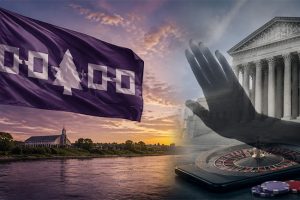
 The Mohawk Council of Kahnawà:ke has withdrawn from a Supreme Court of Canada appeal concerning the legality of Ontario’s ability to pool peer-to-peer iGaming liquidity with international markets. The case remains active and continues to involve provincial lottery operators, regulators, and major online gaming companies.
The dispute focuses on whether Ontario can legally connect its regulated peer-to-peer gambling products, including online poker and daily fantasy sports, with players outside Canada under the Criminal Code framework. The matter has progressed through the Ontario Court of Appeal and is now under review at the Supreme Court of Canada.
Provincial Operators Continue To Advance Appeal
The legal question originated from a reference filed in late 2024 by the government of Ontario, supported by industry stakeholders such as the Canadian Gaming Association, Flutter’s PokerStars, and NSUS’s GGPoker. The Ontario Court of Appeal ruled that it would be lawful under the Criminal Code for Ontario to connect peer-to-peer liquidity with international jurisdictions, provided the Ontario-facing portion of the games remains regulated by the province.
Following that ruling, several provincial lottery corporations initiated an appeal to the Supreme Court of Canada. These include the Atlantic Lottery Corporation, British Columbia Lottery Corporation, and Manitoba Liquor and Lotteries, later joined by Loto-Québec.
Alberta Gaming, Liquor and Cannabis is participating as an intervenor in support of Ontario’s position.
Kahnawà:ke Withdraws From Supreme Court Proceedings
The Mohawk Council of Kahnawà:ke previously participated in the Ontario Court of Appeal phase as an intervening party but has now confirmed it will not seek involvement at the Supreme Court stage.
A representative of the Council, Tehosterihens Deer, stated that its position would be adequately represented by other intervenors already engaged in the proceedings. The Council also noted that resource allocation considerations played a role in its decision, stating that continued participation would not represent the most effective use of its resources.
In earlier submissions, Kahnawà:ke argued that the proposed liquidity model would be inconsistent with the Criminal Code unless gaming activity was fully hosted within Ontario. This interpretation differed from Ontario’s position, which maintained that provincial regulation of the Ontario-facing segment is sufficient for compliance with federal law.
Previous Legal Disputes Over Ontario iGaming Model
The Mohawk Council of Kahnawà:ke has previously challenged Ontario’s regulated iGaming framework. In a 2024 Ontario Superior Court case, it argued that the province’s model conflicted with the Criminal Code and exceeded constitutional authority. The court rejected the challenge, ruling that iGaming Ontario operates within a lawful structure.
Kahnawà:ke did not appeal that ruling further and subsequently ceased operations of its Mohawk Online Limited subsidiary in Ontario. The entity had previously operated Sports Interaction outside Ontario under an agreement with Entain, which ended in late 2024.
Broader Regulatory And Industry Developments
While Kahnawà:ke steps away from the case, other stakeholders continue to advance arguments regarding cross-border liquidity in peer-to-peer gaming. Alberta has joined the proceedings as an intervenor, arguing that the Criminal Code does not prevent Ontario from linking player pools with other jurisdictions where mutual agreement exists.
At the policy level, Alberta and Ontario have also signaled interest in interprovincial liquidity arrangements. Alberta iGaming Corporation CEO Dan Keene has stated that both provinces are working on a memorandum of understanding to explore shared liquidity, describing the concept as commercially beneficial.
The Supreme Court proceedings continue with multiple provincial and industry participants contributing differing interpretations of how peer-to-peer gaming should be regulated across Canada.
Source:
Kahnawà:ke withdraws from Supreme Court iGaming liquidity appeal, canadiangamingbusiness.com, June 18, 2026