A New Yorker is far from pleased with Caesars Entertainment’s marketing campaigns across the state and has taken their fights to court. Last week, plaintiff Lachae Vickers has submitted against the major betting operator for allegedly misleading customers with marketing initiatives about “risk-free” wagers, which can turn out to be quite costly to bettors.
Caesars Entertainment is one of the nine sportsbook operators that offer legal online sports betting in the Empire State. The market opened up in January 2022, and the company operates via its Caesars Sportsbook mobile app. However, as a relatively new marketplace, the Empire State’s sector still requires lots of adjustments and regulations to make it complete.
Taking Legal Action
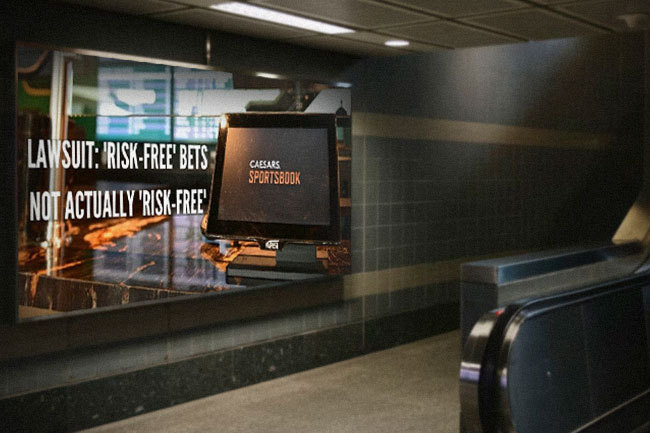
In the lawsuit, the plaintiff alleges that the operator’s advertising of “risk-free” bets is deceptive and can trick players into losing tons of funds. The lawsuit will now go through the US District Court for the Eastern District of New York. In the lawsuit, she is seeking to represent a plethora of the sportsbook’s users along with a subclass of New York sports betting users.
Ms. Vickers bet and lost US$125 after signing up on the company’s app and she commented that the sportsbook’s tempting offers have been effecting to persuade her and other Americans to create sports wagering accounts. However, in her words, new users quickly discover that the so-called ‘free’ or ‘risk-free’ bets can result in them losing money on a wager.
Via the lawsuit, the plaintiff is after unspecified damages and injunctive relief, as well as claiming violations of New York’s General Business Law. This will also include negligent misrepresentation, intentional misinterpretation and fraudulent inducement, among other things. Her idea is to potentially prevent any new gambler from losing money due to the so-called vague marketing.
Working on Restrictions of Ads
Meanwhile, the regulator of the sports betting market, the New York State Gaming Commission, is aware of the issue of the barrage of sports wagering advertisements. During this week’s meeting members of the commission approved regulations for advertising, marketing, and promoting оф legal sports betting in the Empire State’s sector.
Some of the new restrictions would ban false, deceptive or misleading statements in ads, while also prohibiting the terms “free” or “free of risk”, if a bettor is risking their own money, and include a requirement to “clearly and conspicuously” disclose all material terms and conditions of a promotion. There was also a proposal to ban sportsbook marketing to underage individuals.
Furthermore, the regulator is also looking into how lottery products are advertised to locals. The proposal is exploring whether to limit the use of the word “play” in advertising by lottery courier services. It suggests adding limits on how the companies can advertise to protect customers as part of an effort to prevent false, deceptive, or misleading advertising by providers